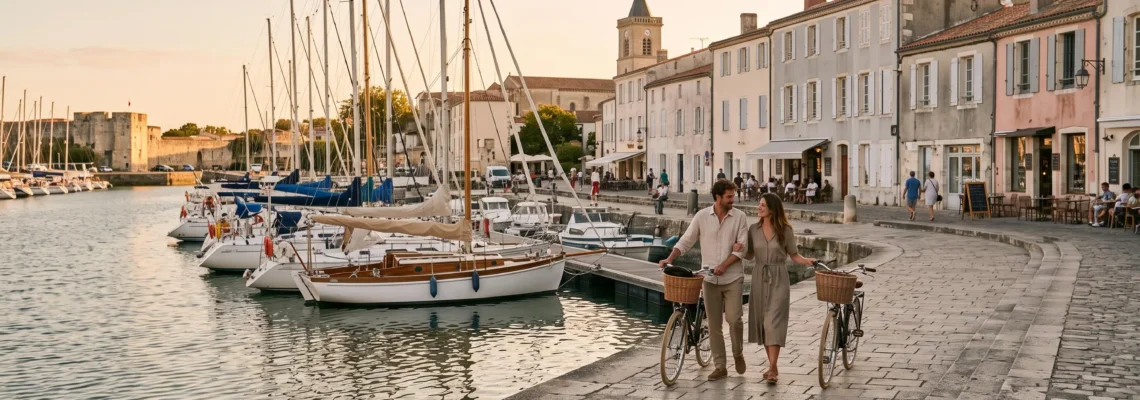
Paris does luxury with grand hotels, late-night tables and museum queues. Provence does it with hilltop views, vineyards and busy seasonal markets. Île de Ré luxury travel sits at the opposite end of the spectrum: quieter, more discreet, and built around harbours, cycling lanes and low-key places to eat well—without needing a headline-making scene.
The question is whether a small Atlantic island can genuinely deliver a high-end break. It can—when you define luxury as space, calm, and carefully chosen addresses rather than spectacle. This guide gives concrete markers on where to base yourself, what to book, and when to go, plus the limits to know before you commit.
How to decide if Île de Ré fits your luxury brief
- Choose it if you want understated luxury: harbour evenings, cycling between villages, and a slower pace than Paris or Provence.
- Base yourself around Saint-Martin-de-Ré or La Flotte for the island’s most polished harbour atmosphere.
- Book early for peak summer if you dislike compromise on location and dining times—then use shoulder season for more tranquillity.
- Think “private and local”: boutique hotels, villas, seafood tables, markets and producers rather than big resorts.
Why Île de Ré Has Become France’s Quietest Luxury Escape
Direct answer: Consider Île de Ré if your idea of luxury is a discreet setting—harbour-front aperitifs, bike-first exploration, and carefully chosen addresses—rather than the high-profile, high-tempo experience you’ll typically find in Paris or in the most visited Provençal hotspots.
Decision first: where it works best. Île de Ré is most convincing as a premium break when you want a short, restorative escape with minimal “performance”: no dressy itinerary, no long drives between headline sights, and no need to compete for the most photographed table.
Compared with Paris, the luxury proposition is not about flagship shopping streets and iconic palaces—it’s about privacy, ease and rhythm. Compared with Provence, it’s less about inland landscapes and more about the Atlantic edge: salt-marsh light, working harbours and flat routes that make moving around feel effortless.
Picture the contrast: a Riviera-style resort town at sunset can mean traffic, beach clubs and music carrying down the promenade. On Île de Ré, the premium moment is often simpler—an unhurried harbour walk, bikes parked against a stone quay, and the kind of calm that makes a low-key dinner feel like the main event.
This “quiet luxury” also fits how many Britons travel to France in practice. Official ONS travel trends 2024 data show France remained one of the most visited countries by Great Britain residents, making lesser-known regions especially appealing when you want France without the obvious crowds.
Saint-Martin-de-Ré and La Flotte: Inside the Island’s Prestige Harbours
Decision first: which harbour to choose. If you want a livelier, more “town” feel with a strong sense of arrival, prioritise Saint-Martin-de-Ré. If you prefer an intimate village atmosphere with gentle mornings and an easy waterfront, start with La Flotte. Both give you the island’s most polished, harbour-centred experience—just in different keys.
Saint-Martin-de-Ré: ramparts, harbour life and a more urban rhythm
Saint-Martin-de-Ré is the place to lean into atmosphere: quayside cafés, boats coming and going, and an evening stroll that feels dressed-up without being formal. It’s also the island’s most recognisable historic setting, anchored by Vauban fortifications that are widely referenced in destination literature as a defining landmark (verify heritage details with official cultural or local tourism sources when planning a history-led itinerary).
In practical terms, it can suit travellers who like being able to walk out and immediately have choice: waterfront tables, small shops, and a harbour that keeps its energy even when the rest of the island feels hushed.
La Flotte: market mornings and a softer, village-style elegance
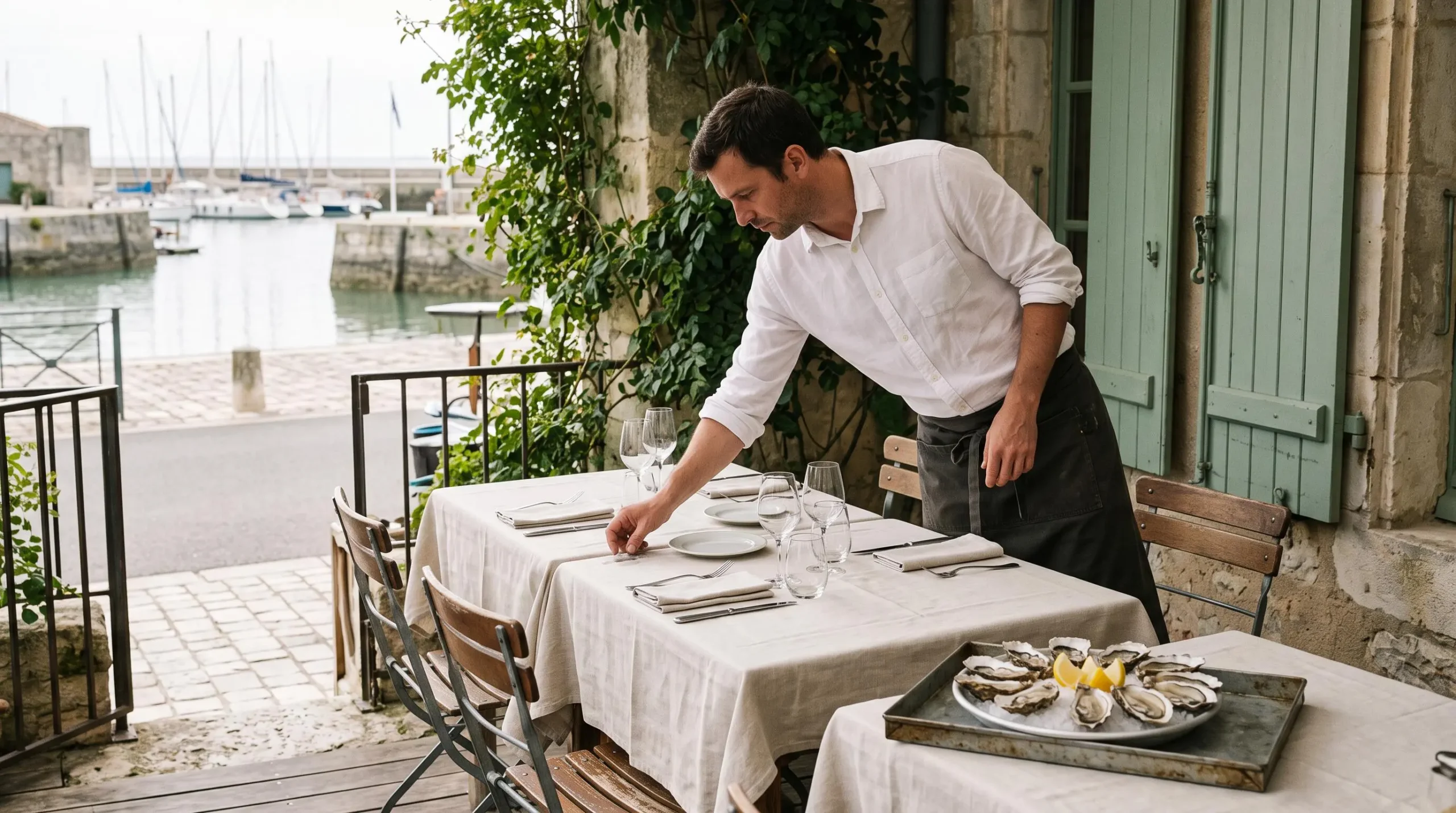
La Flotte’s luxury is quieter: think morning market browsing, then a long lunch within sight of the masts. It’s the kind of place where you can keep the day deliberately simple—good produce, a well-timed table, and a waterfront walk that never feels like an “activity”.
A refined half-day here is easy to picture: a market morning for seasonal ingredients and seafood, a harbour-side lunch, then a slow loop on foot through the lanes before retreating to your base. Compared with Provence’s market towns, the difference is the Atlantic setting and the sense that everything is within easy reach.
If you’re weighing the island as a premium option, base selection matters more than ticking off sights. Being walkable to the harbour—especially in Saint-Martin-de-Ré or La Flotte—is often what makes the stay feel “high-end” in day-to-day terms.
What Does Luxury Really Look Like on the Island?
Decision first: what to reserve. For a genuinely high-end feel on Île de Ré, prioritise (1) a well-located boutique hotel or a private villa, and (2) a small number of strong dining bookings at the times you care about. The rest—cycling, markets, beaches, vineyards—works best as flexible space in the itinerary.
Accommodation: boutique hotels and villas, not mega-resorts
Île de Ré’s upscale offer is rarely about scale. The island’s premium accommodation tends to be defined by smaller properties and privacy-led stays rather than large resort complexes. That can be a strength if your benchmark is intimacy and calm, but it also means availability and the “best address” effect: the most desirable locations can be limited in number.
When comparing with Paris or Provence, treat it as a different category. You’re not choosing between palace-hotel tiers; you’re choosing between the right village, the right atmosphere, and the right level of seclusion.
Dining: seafood-first, with quality that’s best verified before you go
Food is one of the island’s clearest luxury signals—particularly if you value produce, seafood and service over theatrical tasting menus. Claims around Michelin-starred or Michelin-recommended addresses should be checked close to booking (lists change, and precision matters). A good planning approach is to shortlist a few restaurants you’d happily build an evening around, then secure tables early for peak season.
Compared with Provence, where destination dining can involve driving between villages, Île de Ré can feel more immediate: you can build a strong food day around one harbour area and still keep the schedule light.
Understated activities: cycling, salt marshes and vineyards
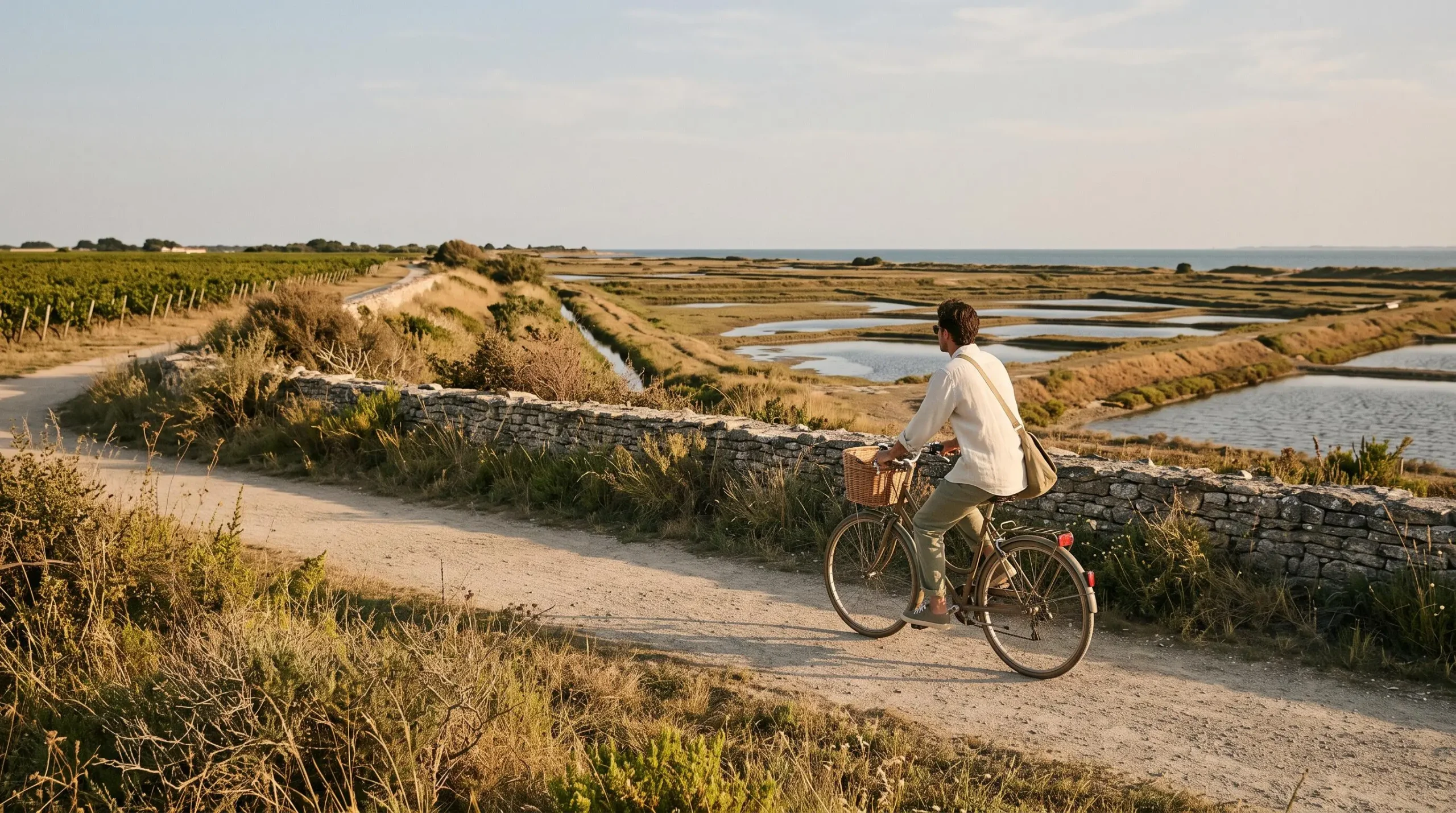
Luxury here often looks like simplicity done well: a beautiful bike route, an unhurried stop at a producer, and a late-afternoon return with the sense you’ve been “out” without ever feeling rushed. The island’s flat terrain makes cycling a realistic backbone even for travellers who wouldn’t ride elsewhere.
If you’re used to Provence’s vineyard estates, recalibrate expectations: the pleasure is in the island setting and the ease of moving between landscapes—vineyards, marshes, ocean—within the same afternoon.
Cas pratique
Hypothetical itinerary for a quiet high-end day: start with a late breakfast at your base (boutique hotel or villa), cycle at a relaxed pace through vineyards and alongside salt marshes, schedule one producer stop, then return for a harbour aperitif before a pre-booked dinner. The “luxury” comes from pacing and privacy—so keep bookings deliberate and leave the middle of the day open.
Planning a Refined Stay: Best Time, Access and Insider Tips
Decision first: when to go. If you’re crowd-averse, prioritise shoulder season around late spring or early autumn rather than mid-summer. Peak summer can still be worth it for atmosphere and long evenings, but it’s the time when you’ll feel the island’s popularity most sharply—especially around the harbours.
June vs August: a simple choice if you dislike crowds
Think of June as “easy luxury”: longer days, a sense of life on the harbours, and typically more breathing space than the height of summer. August, by contrast, can amplify everything—more energy, but also more competition for the most sought-after locations and dinner times.
- You want tranquillity and flexibility:
Choose shoulder season and book fewer fixed activities; reserve only your priority dinners.
- You want the busiest harbour atmosphere:
Choose peak summer, but lock in accommodation and restaurants earlier and plan morning outings to avoid the busiest hours.
- You want a premium break without overplanning:
Go outside peak weeks and build the trip around one “anchor” village (Saint-Martin-de-Ré or La Flotte).
How do you get to Île de Ré from Paris or the UK?
From the UK, the most common routes combine travel into western France (by air, rail or ferry) with an onward leg to the island; the best option depends on where you start, your tolerance for connections, and whether you want a car on arrival. For travellers who like sea crossings, Portsmouth-France ferry passenger data illustrates the scale of cross-Channel ferry travel to France—useful context when weighing ferry-based planning.
From Paris, travellers typically route via the Atlantic coast and then continue to the island by road; exact journey times vary and should be checked at the point of booking, because they depend on traffic, timetables and your starting point in the city.
Insider tips for a smoother high-end stay
- Book for place, not just property: harbour walkability is a daily luxury, especially if you want evenings without driving.
- Pin down dining early in peak weeks: a handful of targeted reservations beats trying to “wing it” at the last minute.
- Keep your daytime flexible: cycling and village-hopping are better without a strict schedule.
For UK travellers, it’s also worth checking current safety and practical guidance before departure. The UK government’s official FCDO travel advice for France flags seasonal wildfire risk (notably April to October) and recommends travel insurance matched to your itinerary and planned activities.
Extending Your French Luxury Break Beyond the Island
Decision first: how to build a two-centre trip. Île de Ré pairs best with a contrasting second stop: a city break (for galleries and dining), or a wine-and-landscape region (for estates and inland scenery). The logic is simple: let the island do the slow, sea-air reset, then let your second destination deliver the “grandeur” that Île de Ré intentionally avoids.
A sample two-centre itinerary: quiet Atlantic first, then classic France
One straightforward pairing is Île de Ré plus a city-led finish: a few days of harbour calm and cycling, then a final leg where museums, shopping and late tables take over—essentially reversing the Paris-first pattern many travellers default to. If you prefer the Provence comparison point, flip it: use Île de Ré for coastal quiet, then choose a Provençal base for markets and inland drives.
If your broader idea of French luxury includes the mountains as well as the coast, a winter or shoulder-season extension can work too. For a contrasting alpine base, you could look at this Chamonix apartment as a separate, high-comfort stop that delivers a very different tempo from the island.
Ultimately, the island’s appeal is its confidence in staying small. If you’ve found Paris too intense or Provence too exposed in high season, Île de Ré luxury travel is the kind of alternative that feels refined precisely because it doesn’t try to compete on spectacle—only on calm, taste and well-chosen places.